

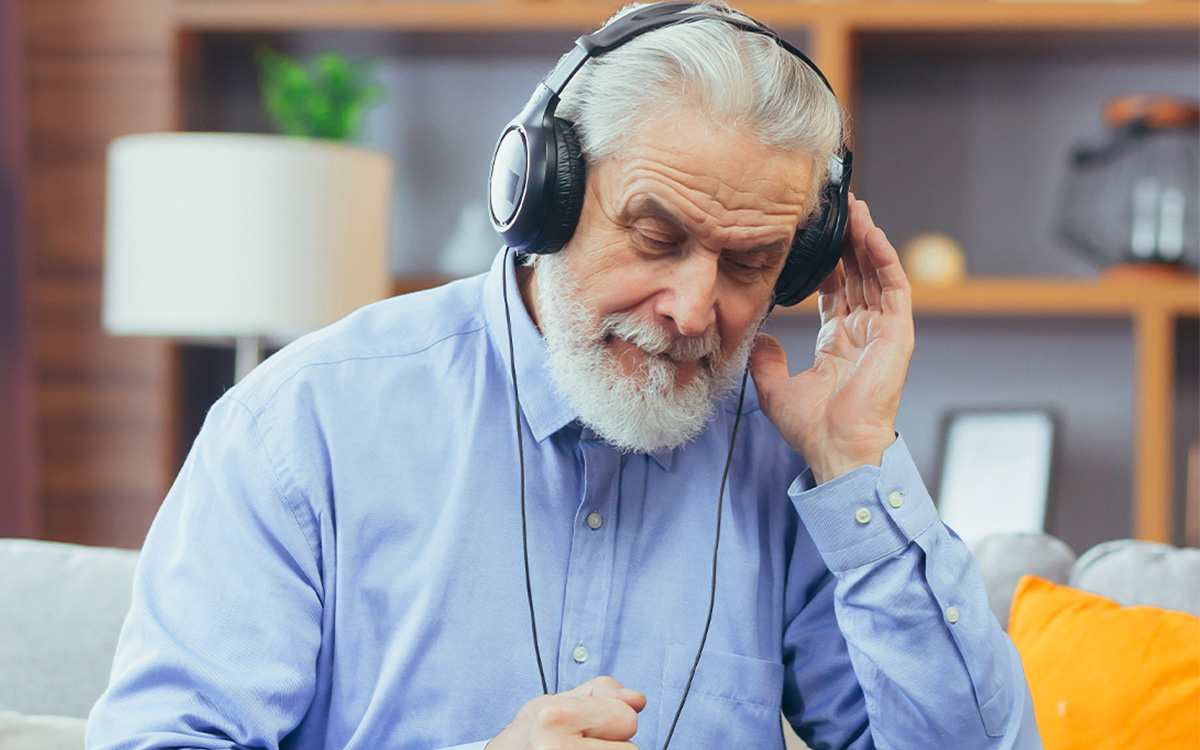
Words can’t move us like music can. Music is powerful. Music from long ago could make you think of your childhood kitchen or make you move without you even realizing it. And for older people, that power is more than just loving good music.
Music therapy has been quietly growing as a field for years now, and the research behind it is pretty compelling. For seniors especially, it’s proving to be a meaningful way to feel more joyful, more socially connected, and more emotionally grounded.
What is music therapy, exactly?
First of all, music therapy isn’t just playing music and going about your day. It’s a planned treatment run by a doctor that combines music and sound to make a person’s mental, physical, and emotional health better.
Before anything else, a qualified music therapist will sit down and get to know your loved one and their musical background, emotional history, physical health, and personal goals. From there, a plan gets built around what actually matters to them specifically. That might mean working through anxiety, sharpening memory, or simply having a regular space to feel things without having to find the right words for them. Think of it as therapy, just with a considerably better playlist.
Music therapy generally comes in two forms. Here’s what each one looks like in practice.
Active Music Therapy
This method, as the name suggests, gets seniors to make music or dance to it. Some frequent formats are:
The dancing side of things is a lot more relaxed than it sounds. A therapist guides you through it, the music carries the energy, and nobody’s grading your footwork. It’s movement for the sake of feeling good, nothing more complicated than that.
Singing or playing an instrument brings its own kind of magic. Some people come in having not touched a guitar or sat at a piano in decades. Others have never tried at all. Music therapy meets them wherever they are and gives them a space to explore without any expectations attached.
And beyond the familiar songs and sing-alongs, there’s also room for something more personal, for instance, writing, composing, improvising. Making music that’s genuinely new and entirely theirs. In a group setting especially, that kind of creative sharing can build a real sense of connection and belonging that’s hard to find anywhere else.
Receptive Music Therapy
Receptive music therapy is the lower-key of the two but don’t let that fool you. Sometimes sitting quietly with a piece of music and actually listening to it does more than any amount of movement could. It’s particularly well-suited for seniors who are carrying a lot emotionally, or who find more active forms of therapy a little overwhelming. Sessions usually end with a gentle conversation about what came up, feelings, memories, associations. It’s unhurried, it’s safe, and for a lot of people it turns out to be exactly what they needed.
Five Ways Music Therapy Can Be Good for Seniors
This is the fun part now. More and more families in Canada are using music therapy to help their aging relatives. This is why.
1. It helps you think and move your body
Your brain loves to listen to music. When you listen to a song you like, it activates many parts of your brain at once. These include the parts that deal with memory, emotion, hearing, and even the dopamine system, which is the portion of your brain that makes you happy.
Older people can benefit a lot from this kind of stimulus. Playing a new instrument or singing a lot may help make new connections between neurons or make the ones that are currently there stronger. Dancing and playing an instrument are also helpful for older people’s health and independence since they help them keep their physical coordination.
2. It seems like exercise, but it isn’t
To be honest, not everyone likes going to the gym. People start tapping their feet, swinging their hips, and smiling when a wonderful song comes on without even realizing it.
Dancing is a great method to get your body moving as part of music therapy. It makes your heart beat faster, boosts blood flow, and releases endorphins, which are hormones that make you feel good and lower your stress levels. Some sessions employ props or light costumes to make things more fun and interesting. You don’t have to be afraid of movement, and music therapy is a perfect illustration of this.
3. It gives feelings a safe place to be
One of the best things about music therapy for older folks is that it makes them feel better. As you get older, you lose things, alter things, get sick, and grieve. Not everyone can readily put their feelings into words. Music gives them another way in.
Seniors can express their sentiments in a way that feels natural and comfortable by singing, dancing, or just listening. Dopamine is released when you listen to music, which can aid with tension, worry, and depression. For people who are sick, have gone through something horrible, or have trouble talking to other people, music may be a surprisingly loud voice.
4. It helps people get to know each other
A lot of seniors in Canada are scared about being alone and not being able to talk to other people. Music therapy makes people feel like they belong right away, especially when they practice it in groups like a dancing class or a chorus. Making music with other people is great because it fosters trust, makes memories, and provides everyone a purpose to be there and join in.
A music group might help seniors who have stopped going out and doing things with other people feel like they belong again.
5. It can help older people who have dementia
One of the most interesting and well-studied effects of music therapy is how it helps people with dementia, such as Alzheimer’s disease.
Music can bring back memories that other things can’t.
There are great anecdotes about old people with advanced dementia who can still play whole pieces of music from memory, even if their minds seem to have forgotten them. During these moments, families might feel a lot of different things.
Music therapy and dementia care go well together because they help people relax, lower their stress levels, and feel like themselves again, both for the person and their loved ones. Science hasn’t shown that music can slow down or stop dementia.
Things to Remember
Music therapy is about as gentle as treatments come but it’s worth going in with a little awareness. A song from decades ago can bring back a lost partner, a difficult period, or a grief that never fully settled. For seniors living with dementia who may not remember certain losses, this can occasionally cause a moment of confusion or distress rather than comfort.
It’s not a dealbreaker by any means, just something to be aware of and talk about. The simplest thing you can do is encourage your loved one to be open with their therapist from the start. What they love, what they’d rather skip, what feels safe. That kind of honesty makes the whole process smoother and a lot more rewarding for everyone involved.
Are you ready to think about music therapy for someone you love?
One of the most human, happy, and scientifically proven ways to keep older people healthy is through music therapy. It’s not clinical or hard; it’s just the healing power of music, with some thought behind it.
We want everyone who lives at Verve Senior Living to feel like they are at home and appreciated. That’s why we have programs like Java Music Club and Java Memory Care that help our seniors enjoy the benefits of music every day.
To find out more about how our communities can give your loved one the love, care, and connection they need, call us now.


